SEARCH

17.10.16

1111 LINCOLN ROAD | herzog & de meuron | "inverting the parking space typology"

Logic and collective consciousness indicate that parking lots should be spaces enclosed in a concrete box, hiding the ugliness of the interior, full of vehicle both in movement and posture from the view of the pedestrian.

Herzog & de Meuron think different.

The infrastructural character of 1111 Lincoln Road is projected to the city, acting at the same time as a view as well as a point of view for the various spectators, in or out of the building. The liveliness of the experience reminds of public transit stations, while the hosted program acts as a continuum with the retail and recreation character of the road and the neighbouring mall. 

Apart from the building's role as a dynamic pole in the urban environment, it stands out architecturally through its structural organism, forming itself as a result of forces, code requirements and program. 


19.4.16

SUPERKILEN | topotek1

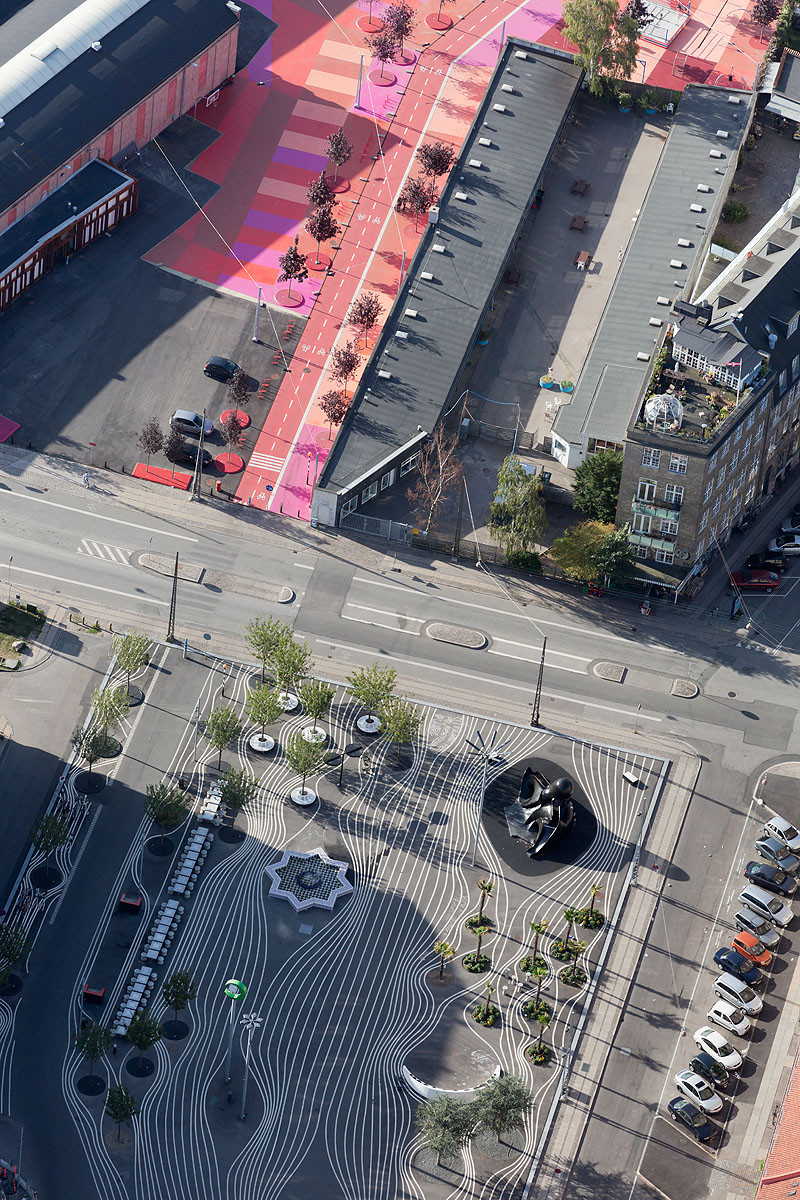
Superkilen is an "Urban Neighbourhood" project in Copenhagen, realised through the collaboration of 3 separate offices, Topotek 1, BIG and Superflex. 

The intervention acts as an open-air exhibition of urban objects, collected from all around the world, running along an already ethnically diverse neighbourhood. The site is divided in three zones, green, black and red, which act as a background to the placed objects and furniture. The proposal responds to the infrastructural needs of the area, providing at the same time an increase of green spaces.

But let's take a look at the black square: Topotek 1 manage to convert asphalt -the no.1 urban material- into a flowing landscape creating various relationships between the body of the visitor and the ground. The painted curves manage to give different identities to the sub-areas of the intervention site, as well as to promote a variety of speeds, depending on the width of the created paths. The pattern of the lines that run from south to north highlights the placed objects, curving around them, instead of acting as an independent platform, which lies underneath the intervention elements. 


Photos are links from archdaily.com